
I. Products and Applications: From Industrial Basic Materials to the Core of Cutting-Edge Technology
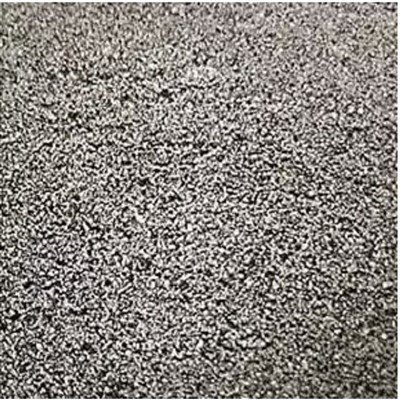
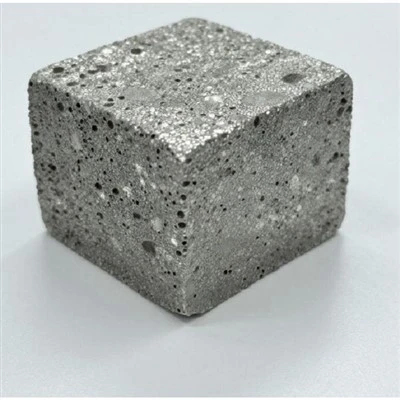
Graphitized petroleum coke is the product of graphitization of petroleum coke at a high temperature of more than 2,800°C. It possesses high electrical conductivity, high chemical stability and low coefficient of thermal expansion. It can be categorized according to its purity:
98.5% purity: mainly used in cast iron and alloy smelting to reduce the sulfur content of castings and enhance the carbon equivalent;
99% purity: used in high-end fields such as lithium battery anode materials, nuclear reactor moderator, aerospace high-temperature components, etc13.
Its downstream demand is growing rapidly, for example:
Iron and steel casting: used as a carbonizer to enhance the strength of steel (e.g. Tangshan's carbonizer products exported to Egypt)68;
New energy: high purity products for lithium anode materials, benefiting from the expansion of the electric vehicle industry;
Semiconductor and photovoltaic: high thermal conductivity to meet the demand for chip heat dissipation and photovoltaic crucible39.
Table: Main application areas and technical requirements of graphitized petroleum coke
Application fields Key index requirements Representative end products
Special steel Sulfur content <0.05%, fixed carbon >98% Automobile engine parts, wind power bearings
Lithium battery anode Purity ≥99%, high vibration density Power battery anode materials
Nuclear industry Ultra-low boron content, irradiation stability Nuclear reactor moderator
Second, the global market pattern: the rise of China's production capacity and regional transfer trends
According to Beziers consulting data, in 2024 the global graphitized petroleum coke market size of tens of billions of yuan, China occupies the core supply position, and the export growth rate is significant:
Increased concentration of production capacity: head enterprises such as Shandong Hengqiao Energy with an annual capacity of 300,000 tons, Hunan XinCarbon New Material with an annual capacity of 45,000 tons, with an export growth rate of more than 40% in the past three years257 ;
Diversification of export markets: traditional markets (Japan, Korea, Europe and the United States) and emerging markets (Southeast Asia, the Middle East, Africa). For example, Hengqiao Energy's products cover more than 20 countries, and Hunan Xin Carbon has entered the supply chain of international giants such as Tata Group and Mittal257;
2030 growth expectations: the global market size is expected to continue to grow, with a steadily increasing CAGR, of which the proportion of demand in the new energy sector will exceed 30%19.
Third, the technological breakthrough of Chinese enterprises: cost, purity and green production
Breaking the overseas monopoly relies on three major technological breakthroughs:
Process innovation: Henan Dongfang Carbon developed a bitumen-free impregnation process, shortening the production cycle from 8 months to 4 months while reducing pollution emissions3;
Equipment Independence: Hunan XinCarbon independently researched and developed "vertical high-temperature continuous graphitization furnace", with an energy-saving rate of more than 20%, and was awarded five national and international patents2;
Low-carbon transformation: Hebei Tianyi Carbon built a 6MW waste heat power generation system, realizing synergistic development of production capacity and environmental protection10.
These technological breakthroughs have given Chinese products a significant cost-performance advantage. For example, Rizhao Hengqiao Carbon's 99% purity product price is only USD307.1/ton, which is 15%-20% lower than similar products in Europe and America.
IV. Export Status and Challenges: Tariff Barriers and Competitive Escalation
Despite the rapid growth of exports, Chinese enterprises still face multiple challenges:
Tariff pressure: the new U.S. tariff policy has pushed up the cost of exports, and some enterprises have turned to Southeast Asia to set up factories to avoid risks19;
Standard barriers: The EU has stringent requirements for boron, vanadium and other impurities, and the certification cycle for 99% pure products is as long as 6 months;
International competition: India, Russia to accelerate the expansion of production, with low prices to compete for the Middle East, Africa market 9.
V. Foreign trade enterprises to break the strategy: technological upgrading and market adaptation
to seize the high-end track:
focus on 99% ultra-high purity products, cut into lithium batteries, semiconductors and other high-value-added areas, such as Shandong Hengqiao Energy has been the layout of the anode material center 5;
Regionalization of production capacity layout:
set up processing bases in Southeast Asia (e.g. Vietnam) to avoid tariff restrictions in Europe and the United States, while radiating the ASEAN market9;
Technical certification front:
take the initiative to obtain ISO 13485 (e.g. Rizhao Hengqiao Carbon), NAG certification for nuclear industry materials, shortening customers' purchasing decision-making chain47;
Bound to core customer scenarios:
For example, Hunan XinCarbon has entered into a "designated cooperation" with auto parts and wind power equipment manufacturers to provide customized sulfur and nitrogen control solutions2 .
Conclusion: A New Journey from "Cost Advantage" to "Technology Discourse"
China's graphitized petroleum coke export road is a microcosm of the traditional industry's climb up the global value chain through technological upgrading. In the face of trade friction and standard barriers, enterprises need to build a moat with purity breakthroughs and deep cultivation of application scenarios. With the outbreak of new energy and high-end manufacturing demand, Chinese enterprises with core technology, green production capacity and international certification will truly realize the leap from "selling raw materials" to "selling standards".
"Petroleum coke, once a waste dump, is now quenched into 'black gold' in graphitization furnaces - not only a rebirth of the material, but also a qualitative change in China's manufacturing."