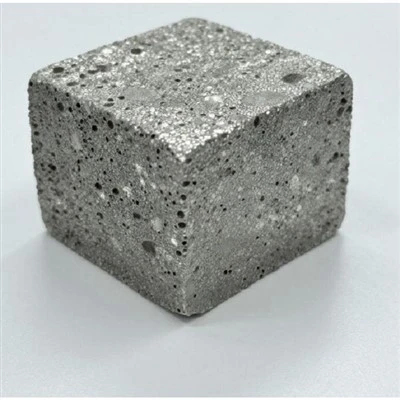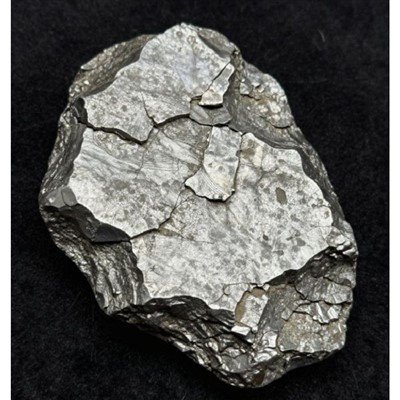

In terms of physical properties, metallic manganese is a grayish-white metal that is hard and brittle, with a density of 7.44 g/cm³, a melting point of 1244°C, and a boiling point of 1962°C. This combination of hardness and brittleness makes metallic manganese difficult to process at room temperature, but also gives it unique advantages in specific industrial applications.
Chemically, manganese is highly reactive. It oxidizes easily in air and reacts with dilute acids to release hydrogen gas. It can also form alloys with many metals, a property that makes it widely used in industries such as steel manufacturing.
In industrial applications, manganese holds an irreplaceable position. In steel production, manganese is an important alloying element. It enhances the strength, hardness, wear resistance, and corrosion resistance of steel. For example, when manufacturing high-strength alloy steel, adding an appropriate amount of manganese can significantly improve the performance of the steel, making it suitable for applications in bridges, construction, machinery manufacturing, and many other fields. Additionally, manganese has important applications in non-ferrous metal alloys. For instance, adding manganese to aluminum alloys can enhance the alloy's strength and corrosion resistance, making it widely used in aerospace, automotive manufacturing, and other industries.
From the perspective of the battery industry, manganese is also one of the key materials for battery manufacturing. Lithium manganese oxide is a common cathode material for lithium-ion batteries, offering advantages such as low cost and good safety, and is widely used in electric tools, small electronic devices, and other fields.
In the financial sector, the price fluctuations of metallic manganese are influenced by various factors. Supply and demand dynamics are key factors affecting manganese prices. When global economic growth leads to increased demand for steel and non-ferrous metals, it drives up demand for manganese, thereby pushing up manganese prices; conversely, a decline in demand may lead to a drop in manganese prices. Additionally, production costs, policies and regulations, and international political and economic conditions also impact manganese prices. Investors can monitor manganese market trends and participate in related futures trading or invest in manganese mining company stocks to achieve investment returns.
In summary, manganese metal plays an important role in the industrial sector due to its unique physical and chemical properties, while its price fluctuations also present investment opportunities in the financial market. Understanding the characteristics of manganese metal and its position in industrial finance is of great significance to professionals and investors in related industries.