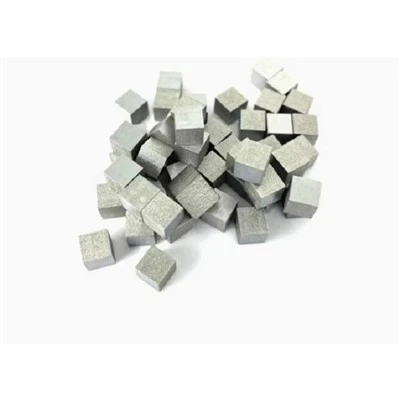


Electrolytic Chromium Metal (ECM) is a high-purity metallic raw material produced via industrial electrolytic refining. Designed for critical applications in superalloys, advanced stainless steels, and specialized welding consumables, our ECM production incorporates controlled electrolytic deposition followed by vacuum thermal degassing. This processing route minimizes interstitial gas and metallic trace impurities, ensuring predictable, reproducible melting performance in vacuum induction melting (VIM) and electroslag remelting (ESR) systems.
Key Features
High Base Purity: Minimum chromium assay >= 99.5% (up to 99.8% for Grade A), preventing unintended tramp element contamination in complex alloy systems.
Controlled Interstitial Gas Content: Rigorously managed levels of nitrogen, oxygen, and hydrogen achieved through vacuum treatment during post-electrolysis processing.
Consistent Physical Morphology: Clean, brittle metal flakes engineered for optimal dissolution rates and high alloy recovery efficiency.
Trace Element Compliance: Heavy metals and non-metallic inclusions kept well within tolerance bounds required by aerospace, nuclear, and defense specifications.
Key Specifications
Form: Irregular flakes (0.1 mm - 50 mm) or mechanically crushed powders tailored to specific end-use requirements.
Apparent Density: 2.5 g/cm3 to 3.8 g/cm3 (dependent on particle sizing).
Surface Condition: Clean metallic luster, completely free of visible slag, heavy oxidation scales, and extraneous foreign matter.
Sizing Options:
- Standard Flakes: 10 mm - 50 mm (bulk melting)
- Fine Grinding: -40 mesh to -325 mesh (powder metallurgy and specialized welding flux)
Chemical Composition
|
Element |
Grade A (High Purity) |
Grade B (Standard) |
Test Method Reference |
|
Cr (min) |
99.8% |
99.5% |
ICP-OES / EDTA Titration |
|
Fe (max) |
0.05% |
0.10% |
ICP-OES |
|
Al (max) |
0.01% |
0.03% |
ICP-OES |
|
Si (max) |
0.01% |
0.03% |
ICP-OES |
|
C (max) |
0.005% |
0.01% |
Infrared Absorption |
|
N (max) |
0.005% |
0.015% |
Inert Gas Fusion |
|
S (max) |
0.005% |
0.01% |
Infrared Absorption |
Applications
Superalloys (Nickel & Cobalt-Based): Used in high-temperature turbine components, combustion chambers, and aerospace structural parts requiring structural integrity under extreme stress and oxidation.
Specialty Steels: Alloying agent for nuclear-grade, cryogenic, and highly corrosive-resistant stainless steel grades.
Welding Consumables: Key raw material in the formulation of hardfacing flux-cored wires, high-alloy electrodes, and PTA (Plasma Transferred Arc) welding powders.
Master Alloys: Grain-refining component for advanced titanium, copper, and aluminum master alloy production.
Manufacturing & Quality Control
Production Route: Chemical Leaching -> Electrolysis -> Vacuum Thermal Degassing -> Mechanical Crushing & Precision Screening.
Testing Equipment: Chemical assays verified via Inductively Coupled Plasma Optical Emission Spectrometry (ICP-OES); gas elements (O, N, H) measured using thermal conductivity inert gas fusion analyzers.
Traceability: Each production heat is assigned a permanent tracking number tied directly to raw material batch logs, electrolytic cell operating parameters, and final laboratory release records.
Quality Assurance: Operations managed and audited in compliance with ISO 9001 standards.
Packaging & Shipping
Standard Packaging
- 25 kg iron drums packed with double-layer inner plastic liners.
- 1,000 kg steel bulk bags (Big Bags) featuring integrated moisture-barrier PE linings.
Storage Guidelines
Store in a dry, well-ventilated indoor environment. Keep away from acids, direct moisture, and corrosive chemical vapors to prevent surface tarnishing.
Transport Classification
lassified as non-hazardous cargo for ocean and air freight; fully compliant with IMO and international transit regulations.
Documentation Package
Every order includes a complete technical and compliance document set:
Commercial Invoice & Detailed Packing List
Certificate of Analysis (CoA) / Mill Test Certificate (MTC) corresponding to the exact heat number
Certificate of Origin (COO / Form A upon request)
Material Safety Data Sheet (MSDS / SDS)
MOQ & Lead Time
|
Minimum Order Quantity (MOQ) |
1,000 kg (Trial quantities of 500 kg considered for qualification programs). |
|
Production Lead Time |
15 - 25 days for standard manufacturing cycles. |
|
Inventory Status |
Standing buffer stock maintained for Grade A standard flakes; ready for rapid dispatch within 3 - 5 business days for existing warehouse inventories. |
FAQ
Q: Can you accommodate tight particle size distributions for specialized powder metallurgy?
A: Yes. Mechanical crushing and closed-circuit air classification allow us to isolate specific particle fractions (such as -100 mesh or -325 mesh) while strictly managing fines.
Q: How is consistency maintained between different production batches?
A: By operating dedicated electrolytic cells, tightly controlling bath chemistry, and applying uniform vacuum degassing parameters, we maintain low standard deviation across chemical assays from batch to batch.
Q: Do you support pre-shipment inspections by independent third parties?
A: Yes. Inspections by agencies such as SGS, Bureau Veritas, or equivalent entities at the loading port are fully supported.
Request a Quote
To receive a prompt, accurate commercial quotation, please provide the following details in your technical inquiry:
Required Grade / Purity Level (Cr >= 99.8% or 99.5% TYP)
Form / Particle Size (Flakes or specific mesh specification)
Total Quantity Required & Destination Port (Incoterms 2020: FOB, CFR, or CIF)
Target Delivery Timeline / Qualification Schedule
Hot Tags: electrolytic chromium metal, China electrolytic chromium metal manufacturers, suppliers, High Carbon Silicon Granules